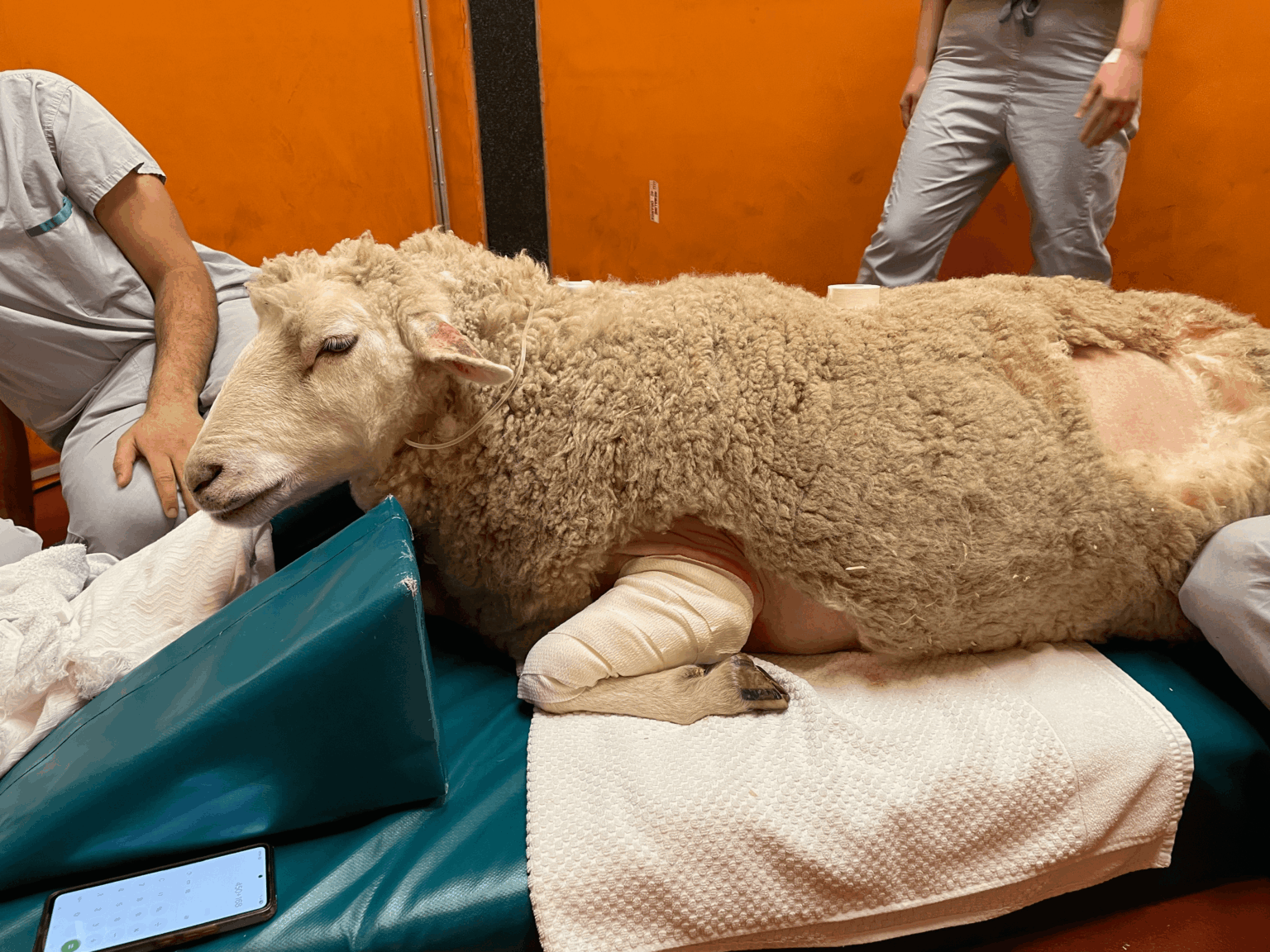
Rosie was featured on CTV news again! Find both her features to see her progress.
CTV News Coverage

Sanctuary Spotlight
One person can truly make a difference, and if you're ready to help, that person can be you!
Urgent Action Items


The next several weeks are going to be extra busy at Lily’s Place as we prepare for six new rescues, all arriving within a short window.
Some are leaving situations that have become dangerous.
Others come from a rare circumstance in which animals are seldom given a future at all.
Two will be picked up this weekend — stay tuned for an update.
If you’ve been with us a while, you know how seriously we take new-arrival care. When animals first come into the sanctuary, they often need help catching up on care that has fallen behind. Bob the sheep is a recent example. His condition was far worse than anyone realized until he arrived.
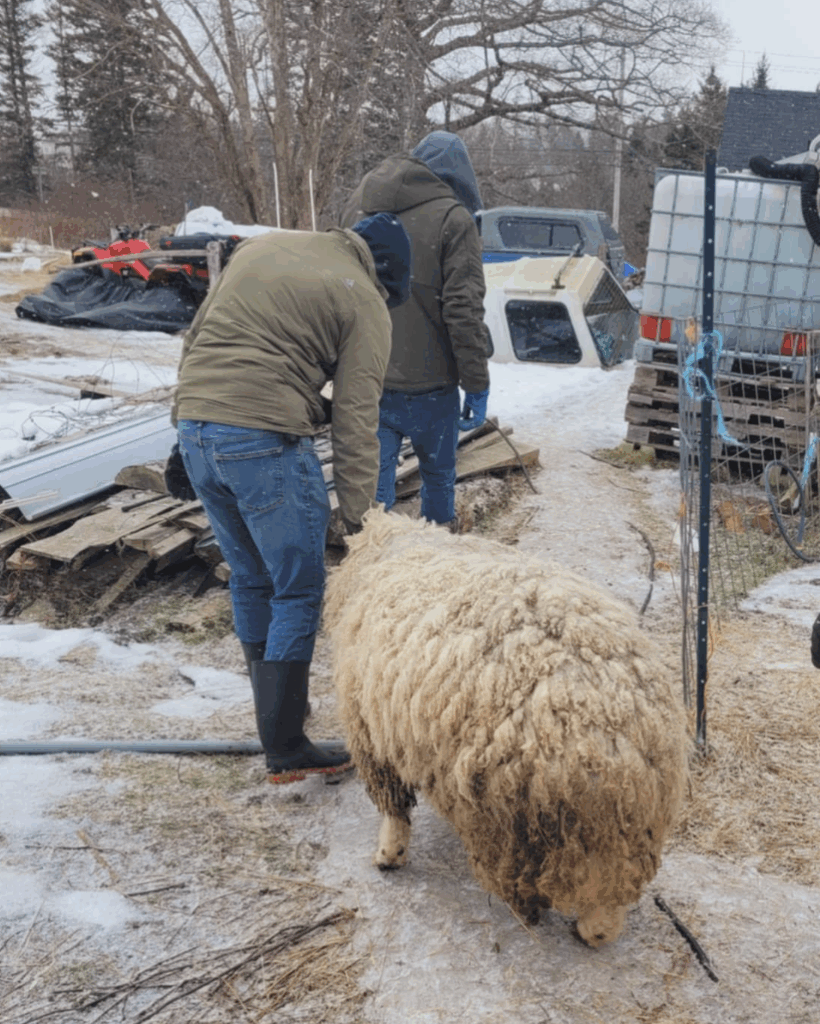


When we first met him, we knew he was struggling, but the full picture didn’t show itself until we could observe him safely.
The very first sign was audible: Bob was grinding his teeth from pain.
We knew he was missing a hind foot, but it became clear that he didn’t want to take more than a few steps on the swollen stump.
Once he lay down — which didn’t take long — we could see the extent of the problem: an irritated, possibly infected stump and three severely overgrown hooves. They had curled from neglect, forcing him to stand in painful, unnatural positions and straining his legs, tendons, and even the bones inside.

Typically, new arrivals get a hands-off, mostly observational first few hours to decompress after travel. Bob needed that, too. While he rested on soft bedding, we gently examined his stump. It looked infected, but it was hard to tell beneath the mud, feces, wool, and the “tentacles” of hoof material that had grown from the bottom of his stump into the surrounding tissue.


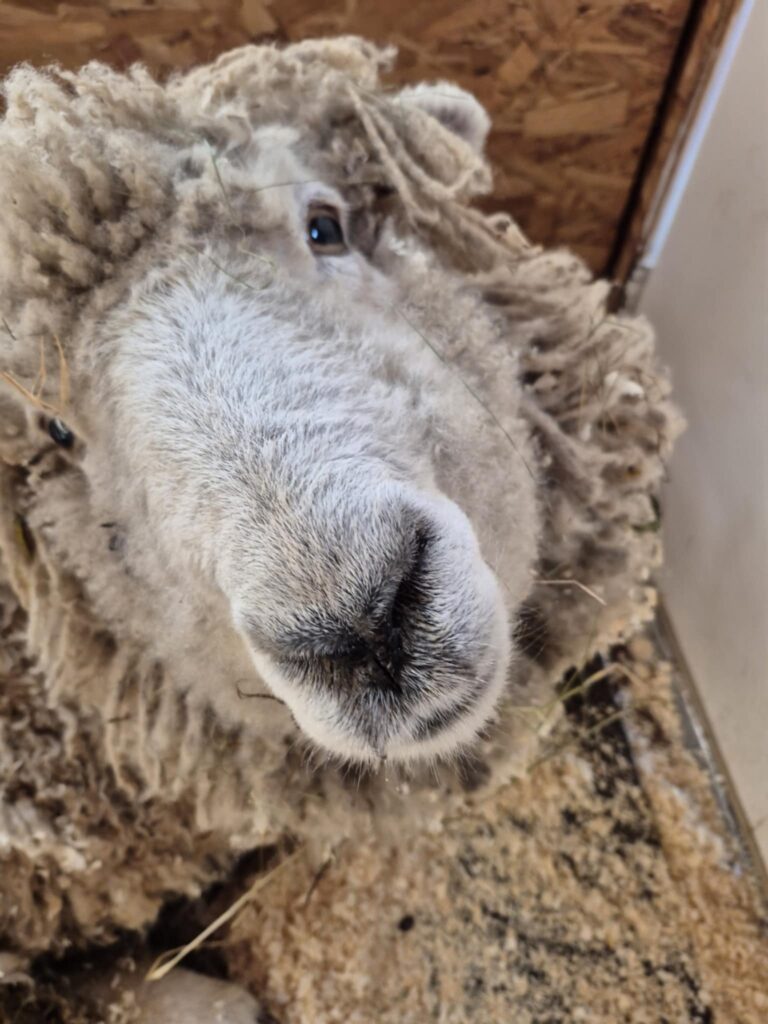
What was certain was that Bob was in pain.
Our priority was getting that pain under control. Bob received a long-acting injectable pain medication. Once it had taken effect, we gave him first aid for his stump and then let him settle in for the night with Josie by his side. It was late — the sun had set hours earlier — and both sheep had endured a long day of travel.
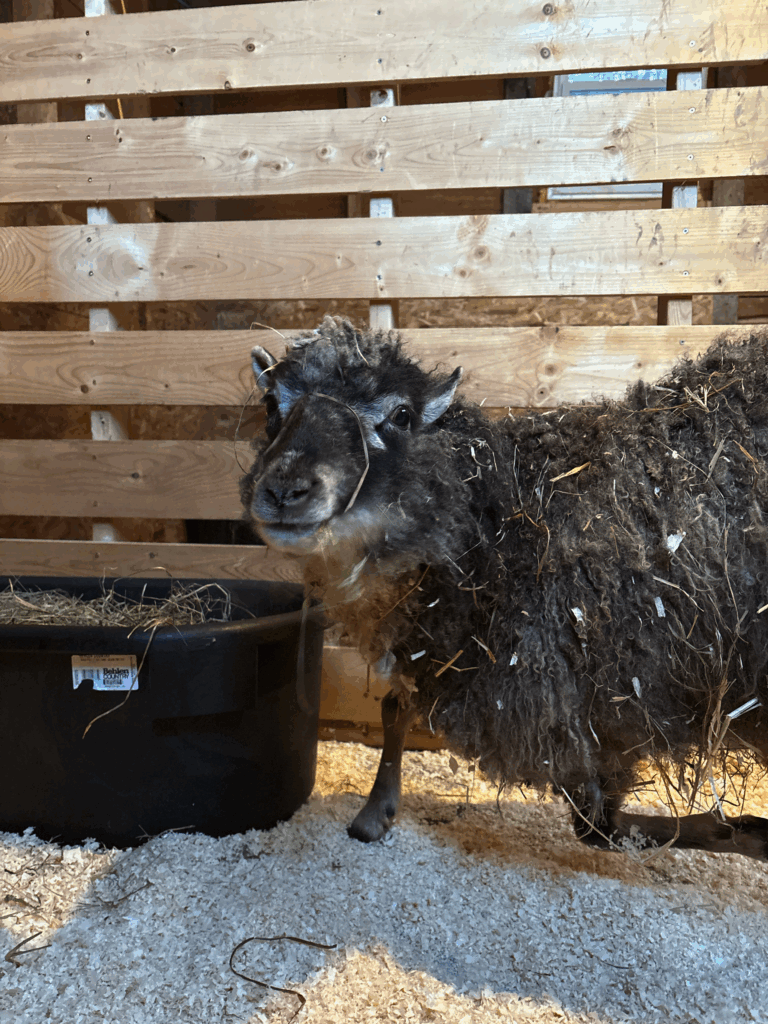
Usually, we give new residents several days to settle before doing hands-on care. Ideally, we wait two weeks, as that initial period after travel is when bloat risk is highest. Bloat is dangerous and can be fatal for ruminants. But waiting that long would have prolonged Bob’s suffering.
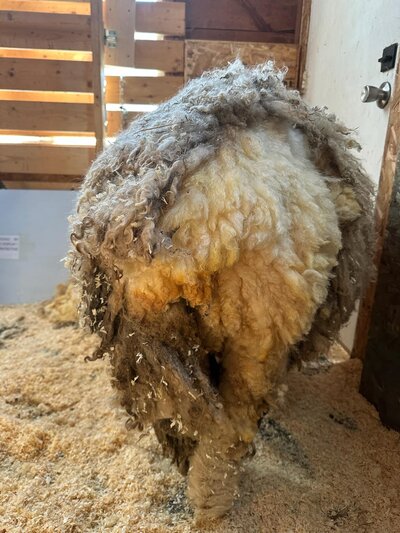
His hooves and stump weren’t the only problems. His full-body mat of wool and debris was so heavy and tight that it pulled his skin painfully every time he moved.
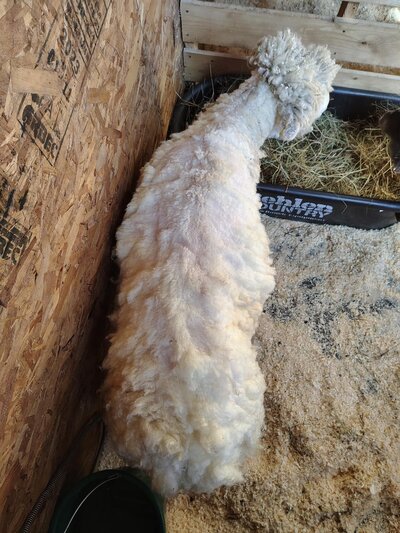
Even though it was March — still winter here — we sheared Bob. We started by removing the thick outer crust of matted material that encased him. Bob was surprisingly agreeable, choosing to lie down after we shorn his underbelly. He even fell asleep. As 16.52 pounds of wool and debris came off, the relief was immediate.
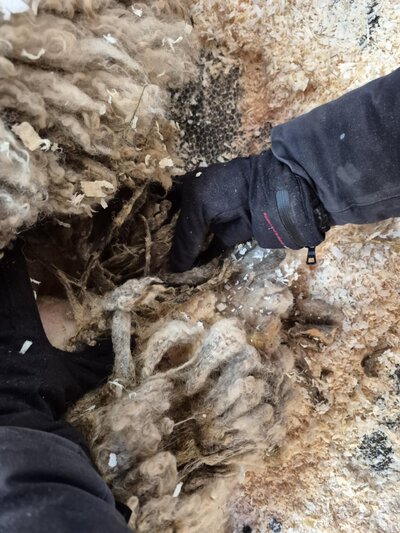
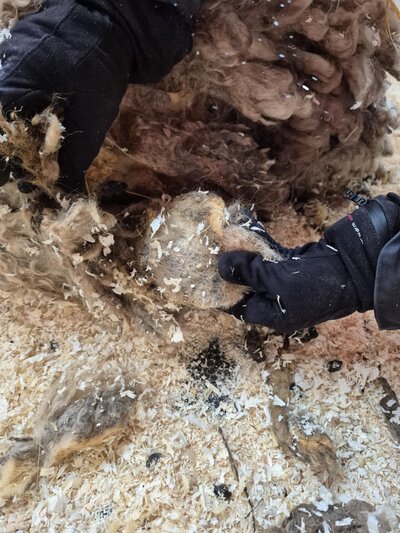
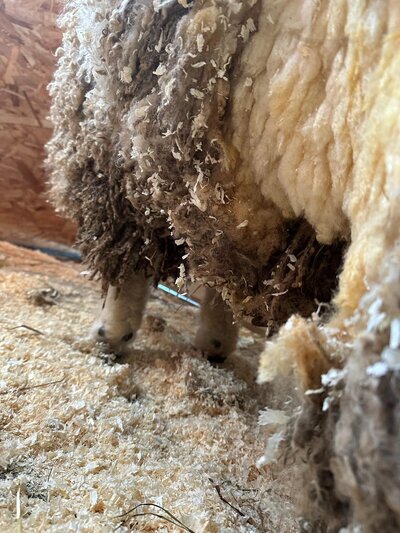

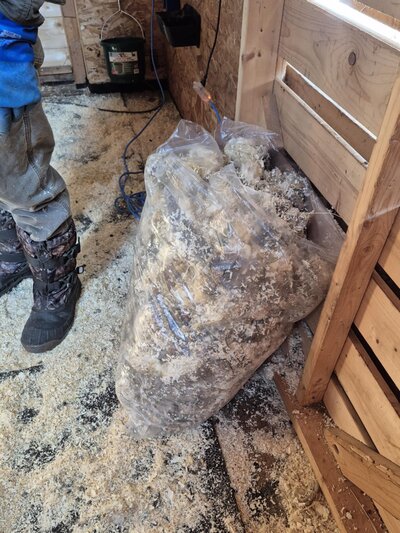

We removed dozens of ticks from his body — I stopped counting after thirty when I realized that was only the beginning.
He still had a couple of inches of wool left, thin and sparse from being stretched by the mat. To keep him warm, we put a miniature horse coat on him.
A few days later, still on pain medication for his joints but already much more comfortable (no more teeth grinding), Bob saw the vet for a full checkup, started antibiotics, and received more stump care.
Then we began the long process of rehabilitating his hooves. Bob is an easy-going patient. During hoof care, he usually lies down, sticks a leg out toward me, and that’s the hoof I work on — a system that suits us both. Correcting neglected hooves takes time; changing angles too quickly can cause new pain or even lameness. Since March, Bob has had careful, consistent hoof trims every few weeks.
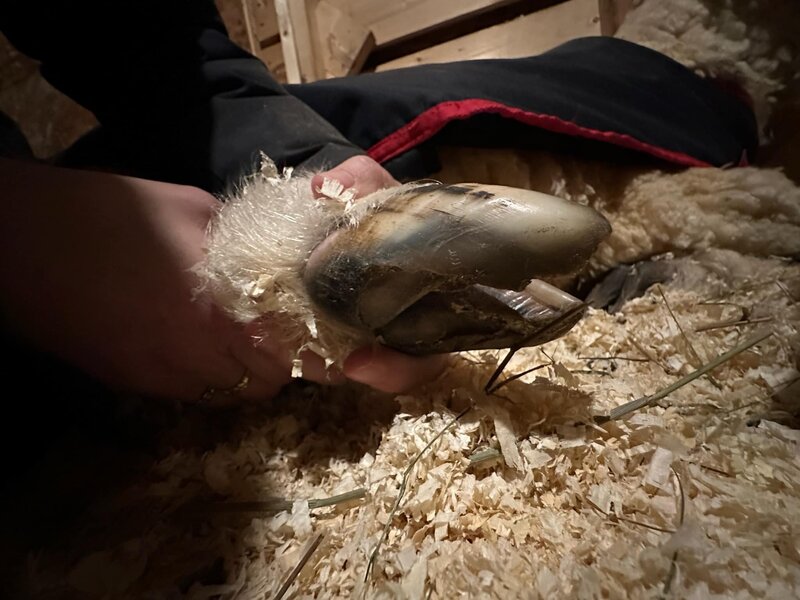
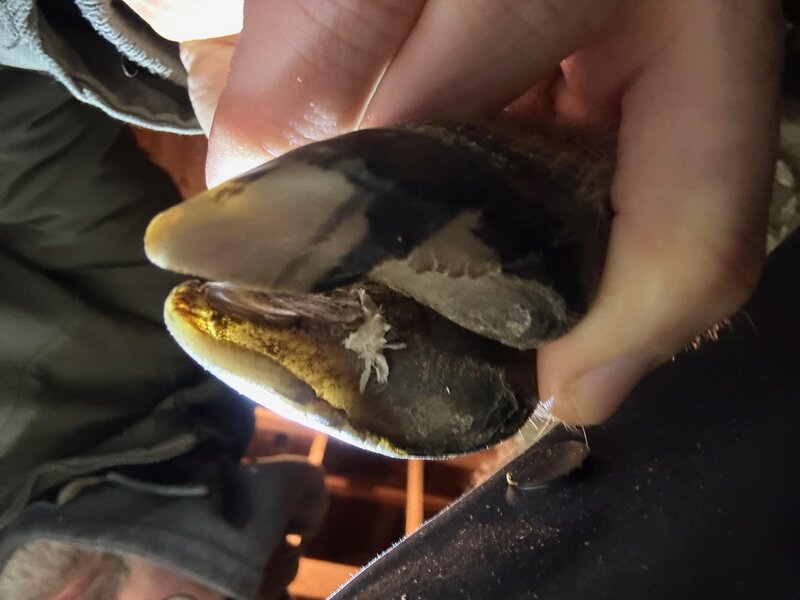

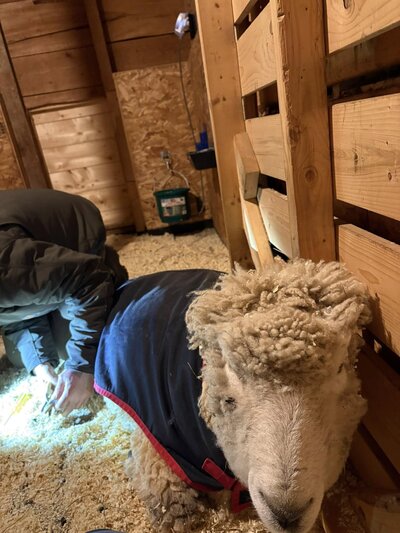
I’m happy to say his hooves are worlds better now. He may always stand a little awkwardly because the neglect caused lasting limb changes, but he gets around well for an old guy and moves at a good clip at mealtimes.
Will we see a repeat of Bob’s story among the new residents? For their sake, I surely hope not. But we’ll find out together, and I’ll keep you updated as they arrive.
That’s what Giving Tuesday is all about this year: soft landings for the lives counting on us.
Our Giving Tuesday goal is ambitious: to fully fund the first 90 days of care — the stabilization window — for all six new residents.
Last year, our Lily’s Place family (that’s you) came together and funded 90 days of care for one resident.
Many of you will remember Billy, our first intake of 2025, who had to be rushed to the large animal emergency hospital (AVC) in PEI after initially seeing a local vet. Without a successful Giving Tuesday last year, Billy wouldn’t have been admitted, wouldn’t have received round-the-clock care, and would not have been at peace in his last days. We would have failed him without your support.
Last year, we shared the real monetary cost during the first 90 days. The average care cost per new resident is $8.34/day. That’s $750.60 for the first three months. With six new arrivals coming in quick succession, our goal this year is $4,503.60.
It’s a highly ambitious number for our small charity, but it’s also the real cost of providing care during an animal’s most vulnerable period. It covers initial and follow-up vet visits, medications, vaccinations, parasite screening and treatment, medical supplies, specialized feed if needed, and the everyday essentials that help them settle safely.
If you’re able to help, a gift toward the first 90 days of care will give these six newcomers the same soft landing Bob received. Every contribution — of any size — brings the promise of better days ahead.
As you noticed, I’m posting this prior to Giving Tuesday, before inboxes start filling up with requests. Giving Tuesday has been on the minds of many of our supporters (thank you to those who reached out to see what we have planned this year).
With my focus quickly shifting to preparing for our intake this weekend, I didn’t want the animals’ monetary needs to end up as an afterthought on Giving Tuesday or buried at the bottom of busy inboxes (who can’t relate? ??), while the team and I are bringing them to safety, getting them settled, and providing any urgent care.
Last year, the community came together, and Giving Tuesday was a big success for the animals, followed by a year of caring for rescues with complex needs, thanks to your support. I hope this Giving Tuesday campaign will allow us to do right by the animals arriving soon and say, “We’ve got you – you’re safe now.”
Just like we did for Billy, Emma, Penelope, Millie, Opal, Viola, Josie, Gladys, and Bob.
Join me in making a soft landing possible.
Discover more from lilysplace.ca
Subscribe to get the latest posts sent to your email.
Resident Updates (all)
How to help
Gracie, Sid, Annie, Punky, Johnny, June, Millie, Emma, Penelope, Bob, Josie, Rosie, Rory, Charlie, Moose, Claire, Nancy, Betty
sheep
Will Feral, Gabby
cats
goats
Tardy
horses
ducks
Sunny, Maple, Broom Hilda, Sage, Ursula, Astrid, Viola, Edith, Opal, Goldie, Rose, Blondie, Elsa, Pearl, Camilla, Amelia, Emma, Unicorn, Dorothy, Larry, Olivia, Ally, Stella, Dora, Celeste, Hart, Minty, Lucy, Little Miss, Chickpea
hens
turkeys
Bandito, Professor Peapod, Mr. T, Black Beard, Ebenezer, Mr. Pink, Mr. Blue, Mr. Green, Mr. Orange, Watson, Mitch
roosters
Barbara, Lydia, Delia
Quail
Animal Rescue
Action Items
Categories
Sanctuary Updates
Newsletters
Looking Deeper
Categories
Categories