Read More
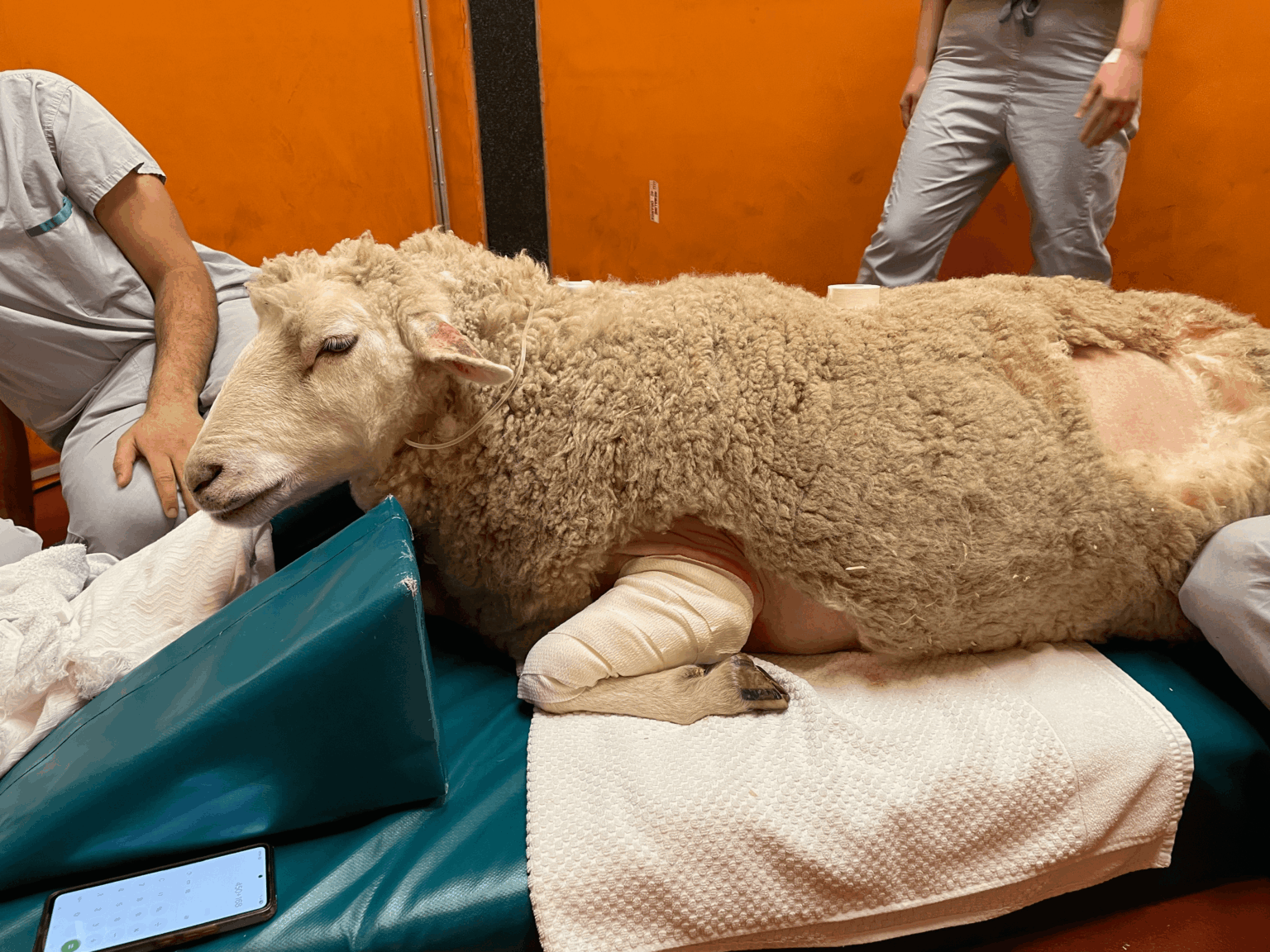
Rosie was featured on CTV news again! Find both her features to see her progress.
CTV News Coverage

Sanctuary Spotlight
Read More
One person can truly make a difference, and if you're ready to help, that person can be you!
Urgent Action Items


hello@lilysplace.ca
contact / e-transfer
506-808-1950
call / text
** This Post Contains Sensitive Content & Euthanasia **
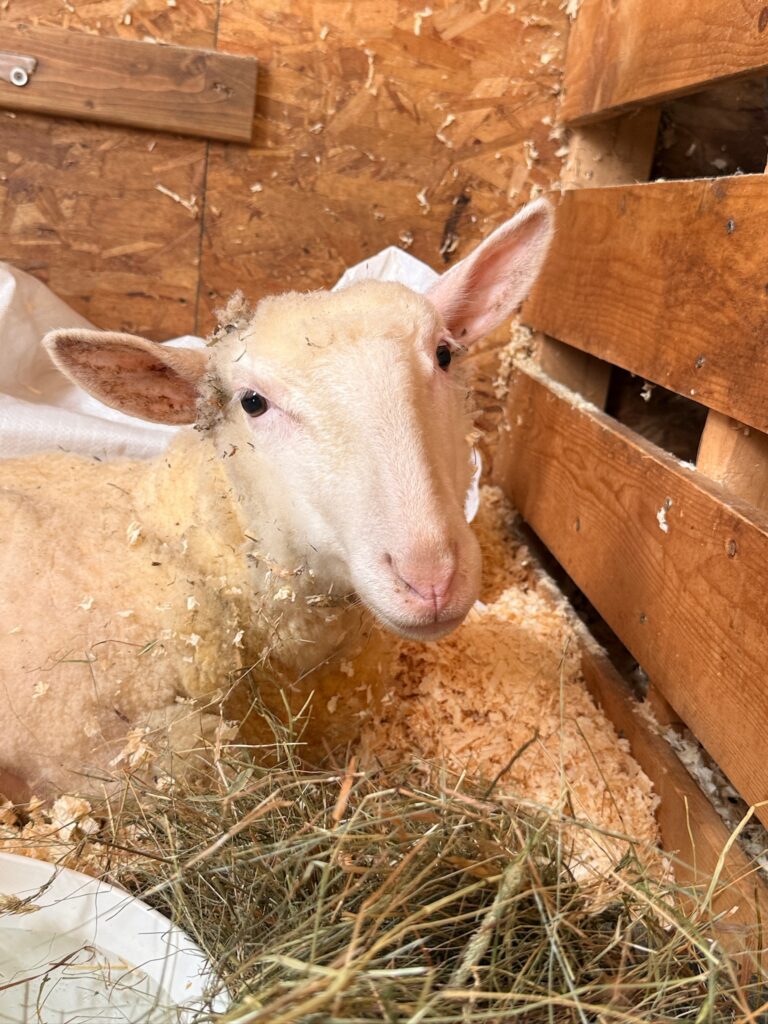
Meadow arrived on Friday, and her time with us was heartbreakingly short.
At the beginning of last week, we were contacted about a sheep in need of help. While we’ve almost reached a year’s worth of intake requests (we average 200 a year) and are still settling recent intakes, we knew this request couldn’t wait.
One of our veterinarians was out on Tuesday for a full morning of health checks on several sanctuary residents, so we explained the situation and timeline.
The vet office had tentatively held space for an on-site appointment, and once Meadow arrived, we let the office know.
I can’t express just how grateful I am that they were able to come out. I knew we were looking into the eyes of a sweet soul trapped in a broken, absolutely heartbreaking state.
What we knew before Meadow arrived was that, back in the fall, she was spotted in their pasture, unable to get up, had a couple of treatments and a vet assessment in November.
Sadly, she hadn’t stood or righted herself since being found in the pasture. She was about 7-8 months then, making her about 16 – 17 months old when she arrived here on Friday.
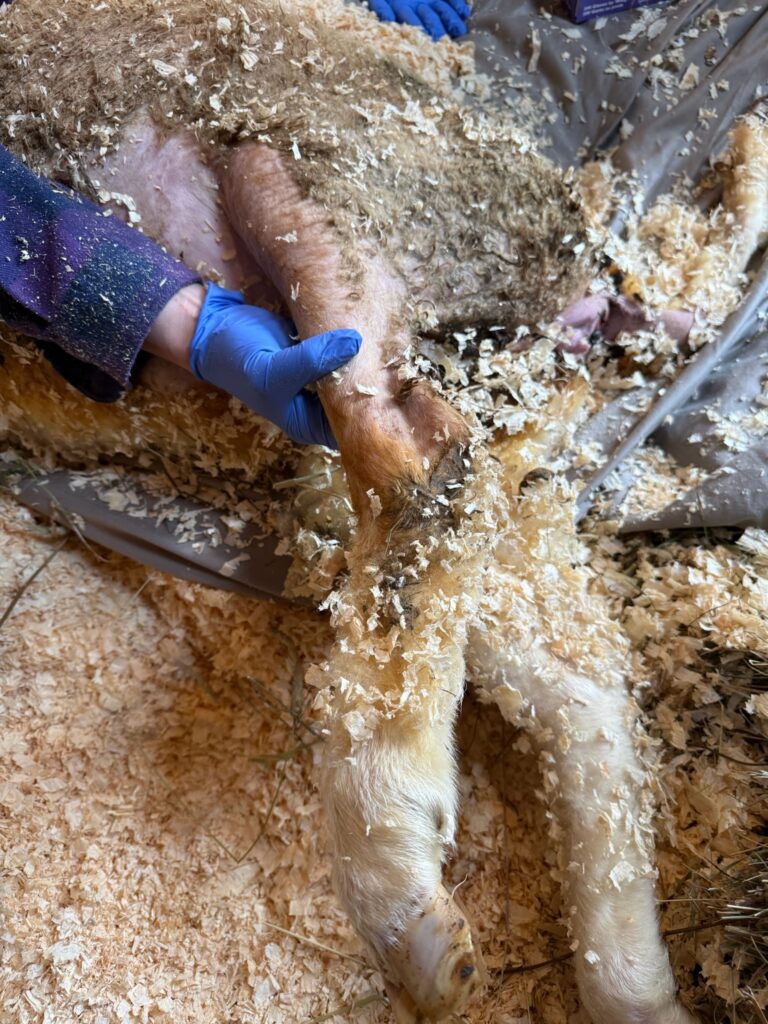
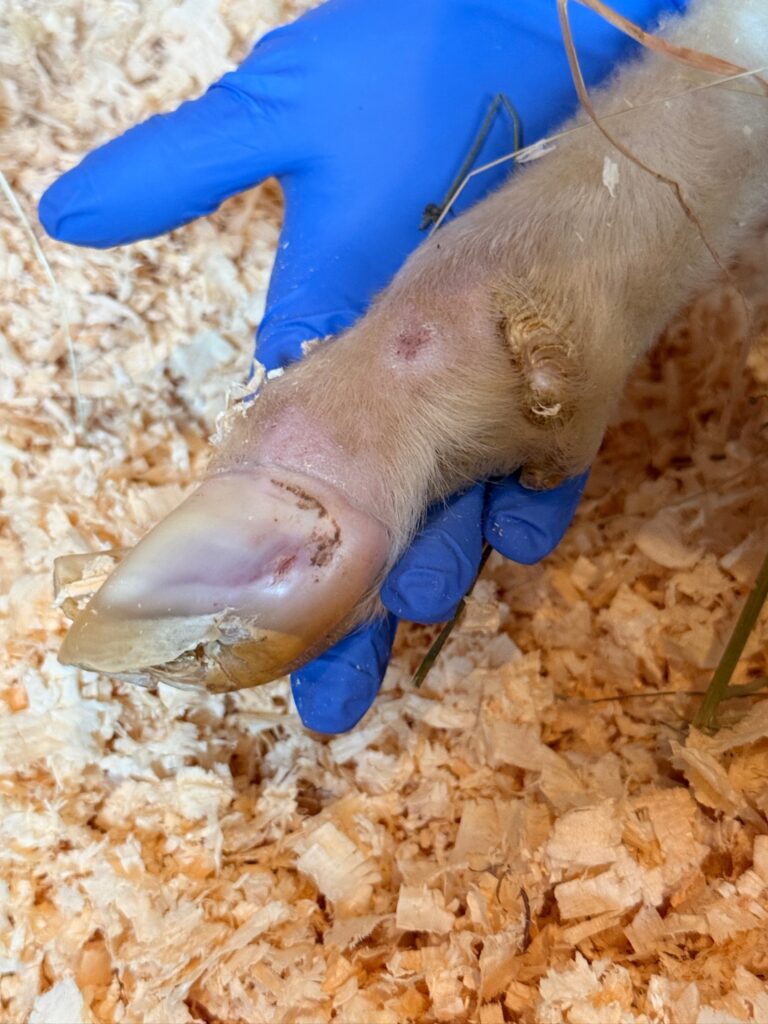
There’s no easy way to say this: the nine or so months of being unable to rise had caused catastrophic damage to her body.
Even if a caretaker can help someone move into another position when they can’t get up and can’t shift their own weight, the pressure on their body over time causes tissue to die, which is a painful progressive process (aka necrosis).
This is different from "wasting" (atrophy), which is when muscles shrink and weaken from lack of use, but the tissue is still alive and has the potential to rebuild. Necrosis, on the other hand, is the point of no return because the tissue has already died and can never be rebuilt.
Just think about being in a situation where you are completely powerless to move: your body is dying underneath you because of your own weight, cutting off blood supply to your limbs, and you can’t even attempt to adjust out of this position because you don’t have the little muscle required to do so. To me, that is something I can only imagine in a nightmare.
Our vet determined that this was the point Meadow was at. There was no path to recovery, and no way to meaningfully manage her pain outside of a hospital setting with round-the-clock IV medication – with zero prognosis for improvement.
There was only one option for Meadow: release her from her broken body. She was surrounded by a compassionate team and a skilled veterinarian, but she was terrified and unable to flee as she didn’t know whether we were friends or foes (an instinct for prey animals). Meadow visually relaxed as the sedative kicked in. She closed her eyes with her head in my arms, Dr. Lisa administering the last needle, and Sophia and Jess witnessing the only, yet the most important, help we could provide.
Meadow found peace.
If you have an animal who is suffering, a recovery isn’t going to plan, or you’ve got a “medical mystery” on your hands, and you don’t know what to do, please reach out, whether that’s a vet, us, or someone else who can connect you with the resources the situation requires. The sooner outreach starts, the sooner our network can try to find help for you and your animal.
To make sure help is available for those like Meadow, now, and after the loss of the provincial service in the spring, please consider donating to our medical fund https://lilysplace.ca/medical

Discover more from lilysplace.ca
Subscribe to get the latest posts sent to your email.
Resident Updates (all)
How to help
Gracie, Sid, Annie, Punky, Johnny, June, Millie, Emma, Penelope, Bob, Josie, Rosie, Rory, Charlie, Moose, Claire, Nancy, Betty, Meadow, Avril
sheep
Will Feral, Gabby
cats
goats
Tardy
horses
ducks & Geese
Sunny, Maple, Broom Hilda, Sage, Ursula, Astrid, Viola, Edith, Opal, Goldie, Rose, Blondie, Elsa, Pearl, Camilla, Amelia, Emma, Unicorn, Dorothy, Larry, Olivia, Ally, Stella, Dora, Celeste, Hart, Minty, Lucy, Little Miss, Chickpea, Piroska
hens
turkeys
Bandito, Professor Peapod, Mr. T, Black Beard, Ebenezer, Mr. Pink, Mr. Blue, Mr. Green, Mr. Orange, Watson, Mitch
roosters
Barbara, Lydia, Delia
Quail
Animal Rescue
Action Items
Categories
Sanctuary Updates
Newsletters
Looking Deeper
Categories
Categories