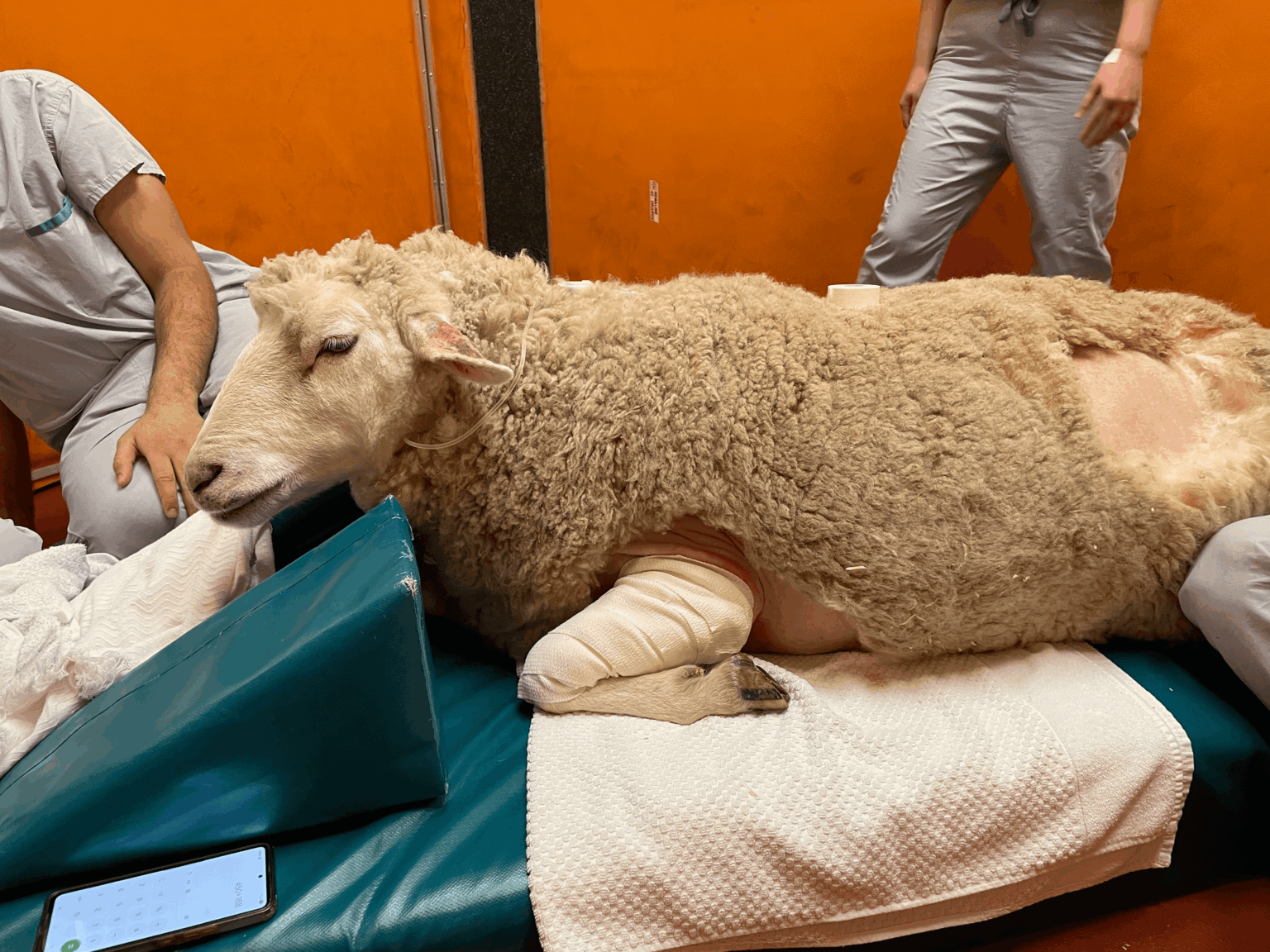
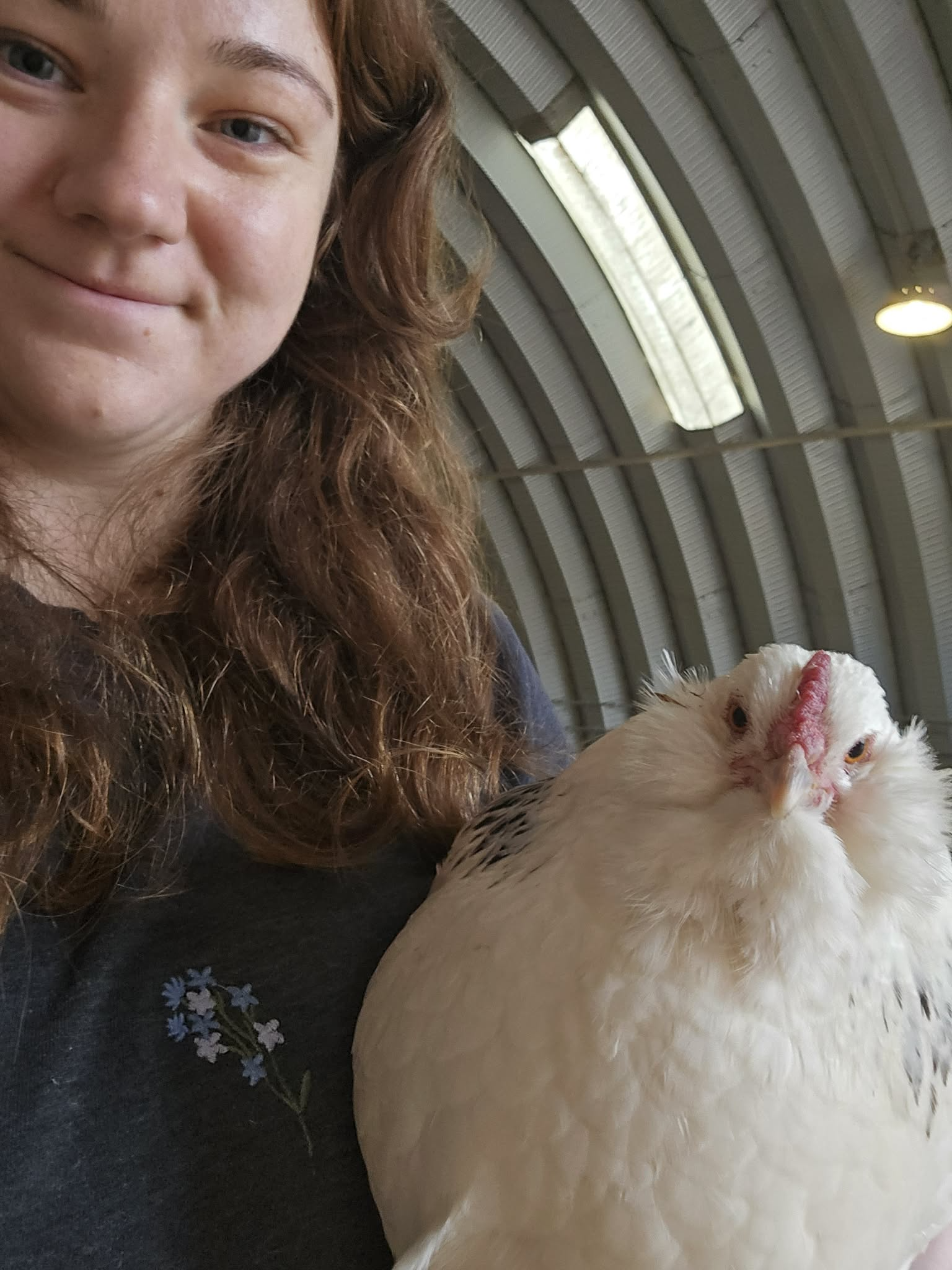
Rosie was featured on CTV news again! Find both her features to see her progress.
CTV News Coverage

Sanctuary Spotlight
One person can truly make a difference, and if you're ready to help, that person can be you!
Urgent Action Items


NB Vet Crisis: The Minister’s Line Is Cheap. So Is Preventing Suffering.
March 21, 2026
Lily's Place
/
Blog
/
Date posted:
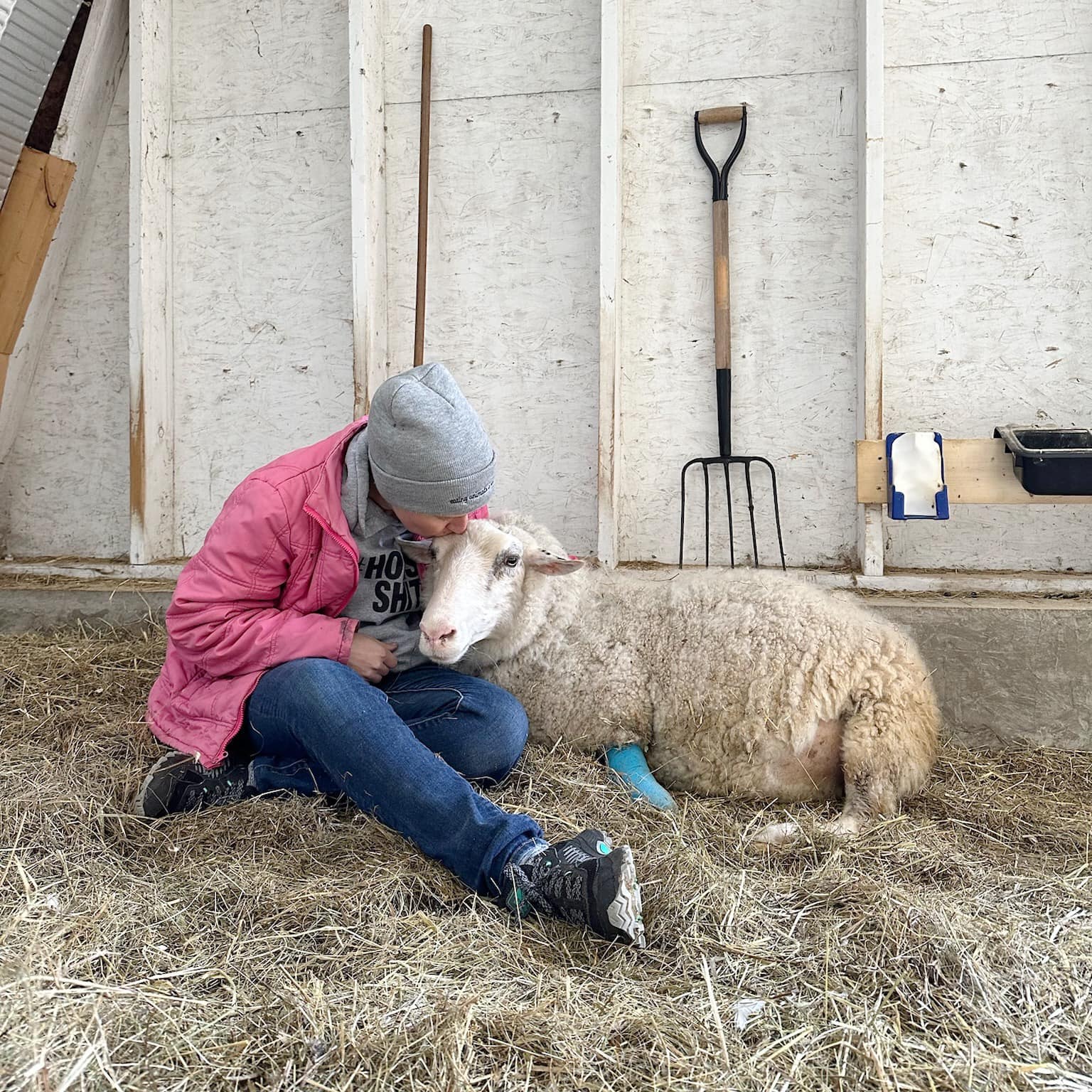
When the minister says, “We’re not paying for dogs and cats. Why are we paying for horses and goats?” it lands the way political lines are meant to land: fast, tidy, and satisfying.
It’s meant to sound like common sense.
What it actually does is flatten a serious public-access and animal-welfare issue into a resentment story.
It invites people to picture the government casually footing the bill for somebody else’s unusual pet, and then asks them to feel annoyed about it. That is not an honest description of what is being cut, how the system works, or what will happen when it is gone.
First off, these services are not free for large animal clients right now, and they never were. Clients already pay out of pocket for veterinary visits and lab services.
What the province provides is a public framework, but the services are paid for by the people who use them, keeping costs low for the province.
The framework the province has in place ensures veterinarians and lab services are available for people to pay for when they need them. Without that framework, the options for care wouldn’t be in place where private access is already thin, inconsistent, and, in most areas, completely absent.
A province that decides 0.032% is too much of a financial burden to prevent suffering is saying they’d rather create a crisis for animals who require large-animal veterinarians than admit they are okay with the suffering that will happen as a direct result of their actions.
Jamie Sabot, Executive Director, Lily’s Place Animal Sanctuary
The second thing to know is how little this actually costs. Based on the province’s own 2026–27 budget documents, the veterinary services line is about 0.032% of total provincial spending. Not 3.2%. Not even 0.3%. Just 0.032%.
That is what makes the minister’s line so cynical. He is trying to stir up public resentment over a service that costs a tiny fraction of the provincial budget, while sidestepping the much harder question:
What happens to animals when the province removes the only viable framework that exists?
Because that is the real issue here.
This is not a debate about whether taxpayers should cover somebody else’s private vet bill (reminder: that’s not happening in the first place).
It is a debate about whether New Brunswick is willing to maintain basic veterinary access for animals who cannot simply be loaded into a car and driven to the nearest small-animal clinic.
We’re talking about a province-wide animal-welfare issue, as well as a rural-access and emergency-response issue.
For Lily’s Place Animal Sanctuary, which takes in abandoned and injured animals with complex medical needs from across Atlantic Canada, this also becomes a cross-border welfare issue when the veterinarian services we rely on cease to exist.
How does a charity that relies heavily on our local veterinarians continue to do this work? What does rescue look like without access to medical care? What will the lives of elderly, recovering, and medically fragile animals look like at Lily’s Place? What will that look like across the province?
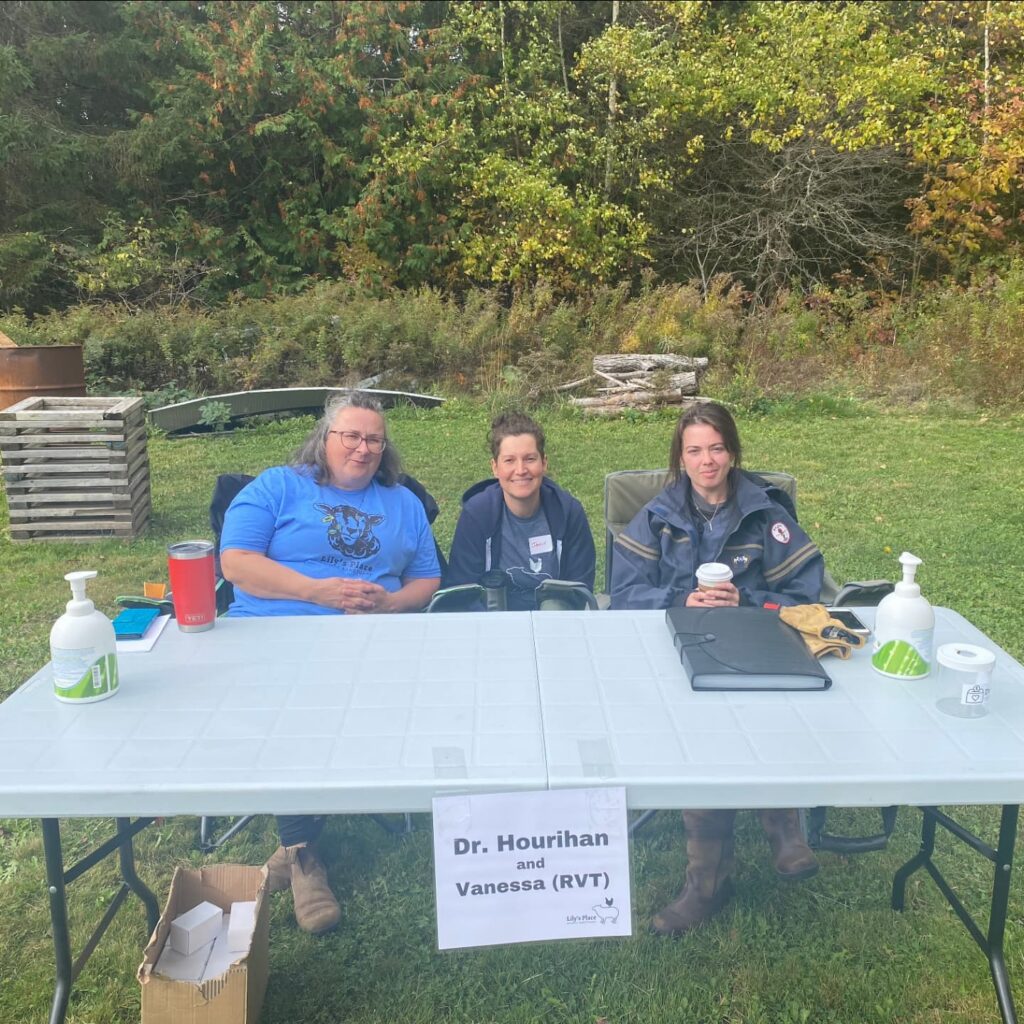
The minister’s comparison to dogs and cats is deeply misleading.
If the minister were talking about animals’ ability to suffer, or our responsibility to care for the species we have domesticated and made dependent on us, then yes, the comparison would be fair. But that’s not what he is doing. He is pretending that the service environment for cats and dogs to receive care is interchangeable with that for horses, goats, and other large animals.
Large-animal care requires travel, field calls, on-site treatment, specialized handling, longer distances, and a veterinarian willing and able to work under conditions that look very different from clinic-based small-animal care.
A large-animal vet often does not walk into a controlled exam room with proper lighting, equipment, trained staff, or an animal that can be lifted onto a table. They are driving long distances between farms and rural properties, in all weather conditions, on rough roads, and under time pressure. They may arrive to treat a very large animal in a barn, field, paddock, or shelter with limited restraint, uneven footing, poor lighting, mud, ice, cold, heat, noise, and few hands available to help.
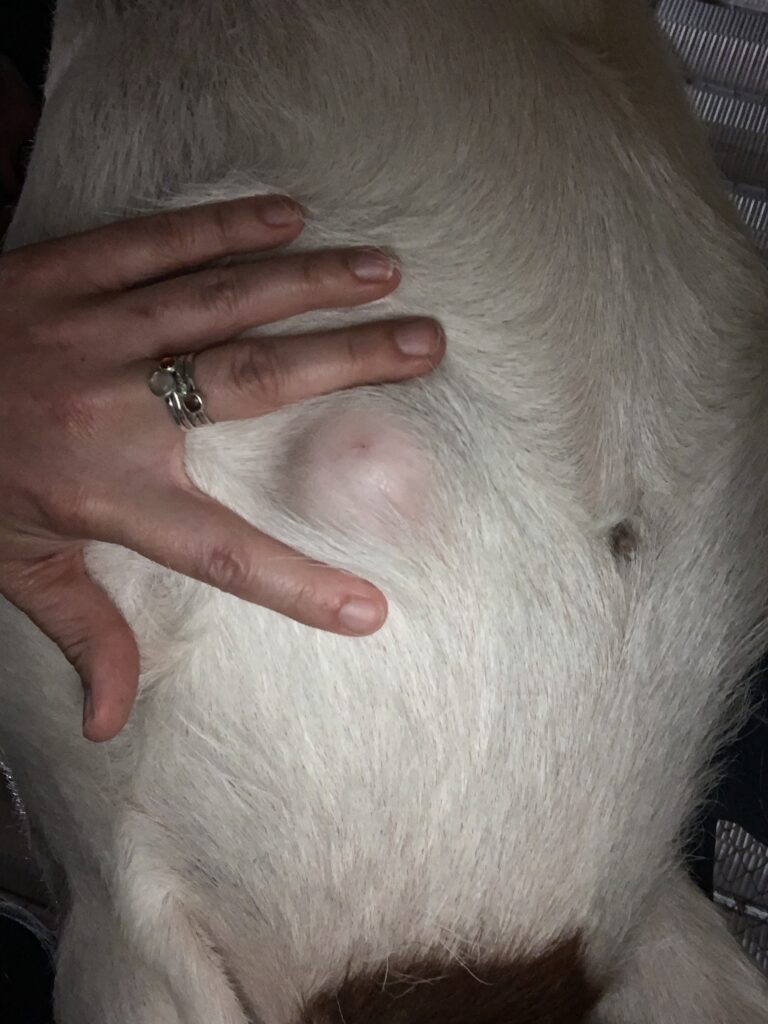
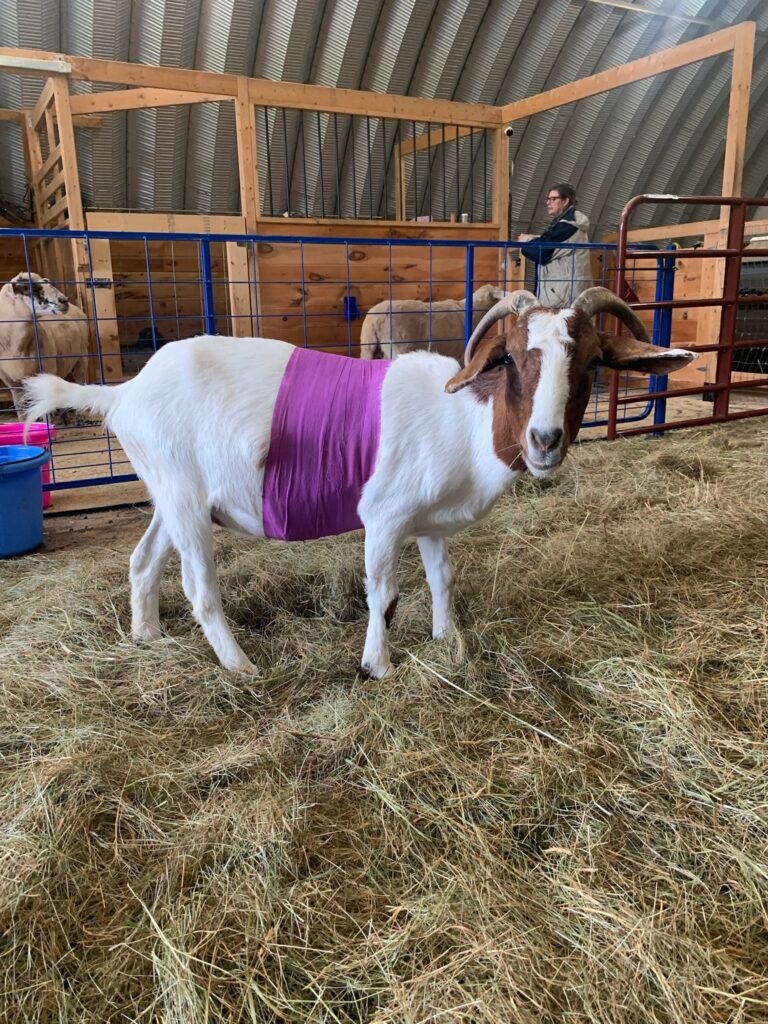
The animals themselves also change the nature of the work. Horses, cattle, sheep, and goats are strong, heavy, and not always predictable when they are frightened, in pain, or distressed. That makes examination, treatment, transport, and euthanasia more complex and more dangerous. Even routine care can pose greater physical risk when the patient weighs hundreds or thousands of pounds and cannot simply be moved into a treatment room.
Then there’s the fact that large-animal vets bring the clinic with them: medications, tools, diagnostic supplies, protective gear, and equipment for field treatment. They may be working alone or with minimal support. They may need to make judgment calls on-site, far from a fully equipped facility. In many rural areas, they cover wide territories, which means more travel time, fewer appointment slots, more on-call pressure, and harder decisions about who can be reached in time.
New Brunswick already has a veterinary shortage, even with the provincial veterinarians in place. So when the government says the private sector will take over, the obvious question is: which private sector?
You cannot transition animals into care that does not exist.
You cannot privatize your way out of a shortage in a short time frame.
That is why this decision is so dangerous. The need for care is not going away. Animals will still be injured, go into distress, develop infections, require urgent medication or humane euthanasia, and need someone qualified to get to them in time. The emergencies will still happen. The suffering that requires a veterinarian to alleviate it will still happen. The only question is whether help will still be there when it is needed.
This whole debate shows an even greater lack of empathy when we consider the urban bias in this decision and the reactions of those who support it.
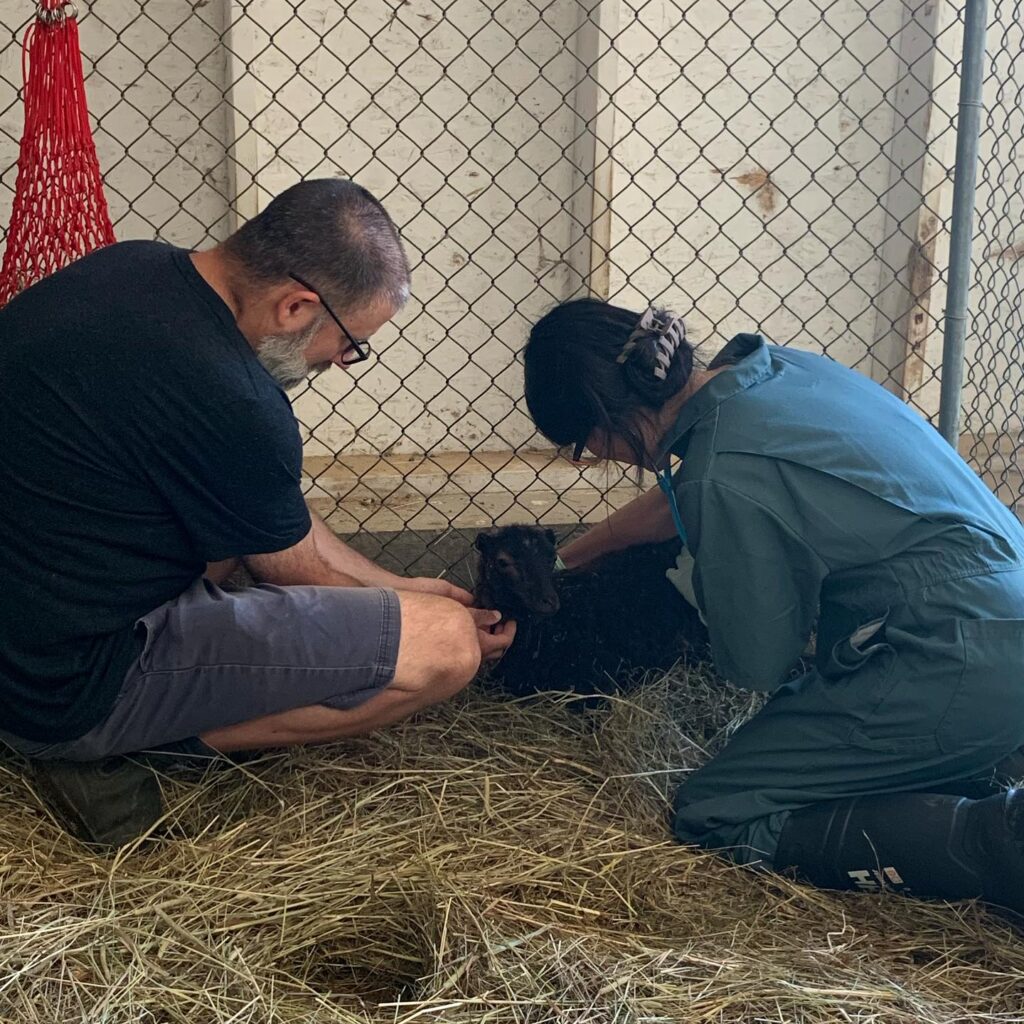
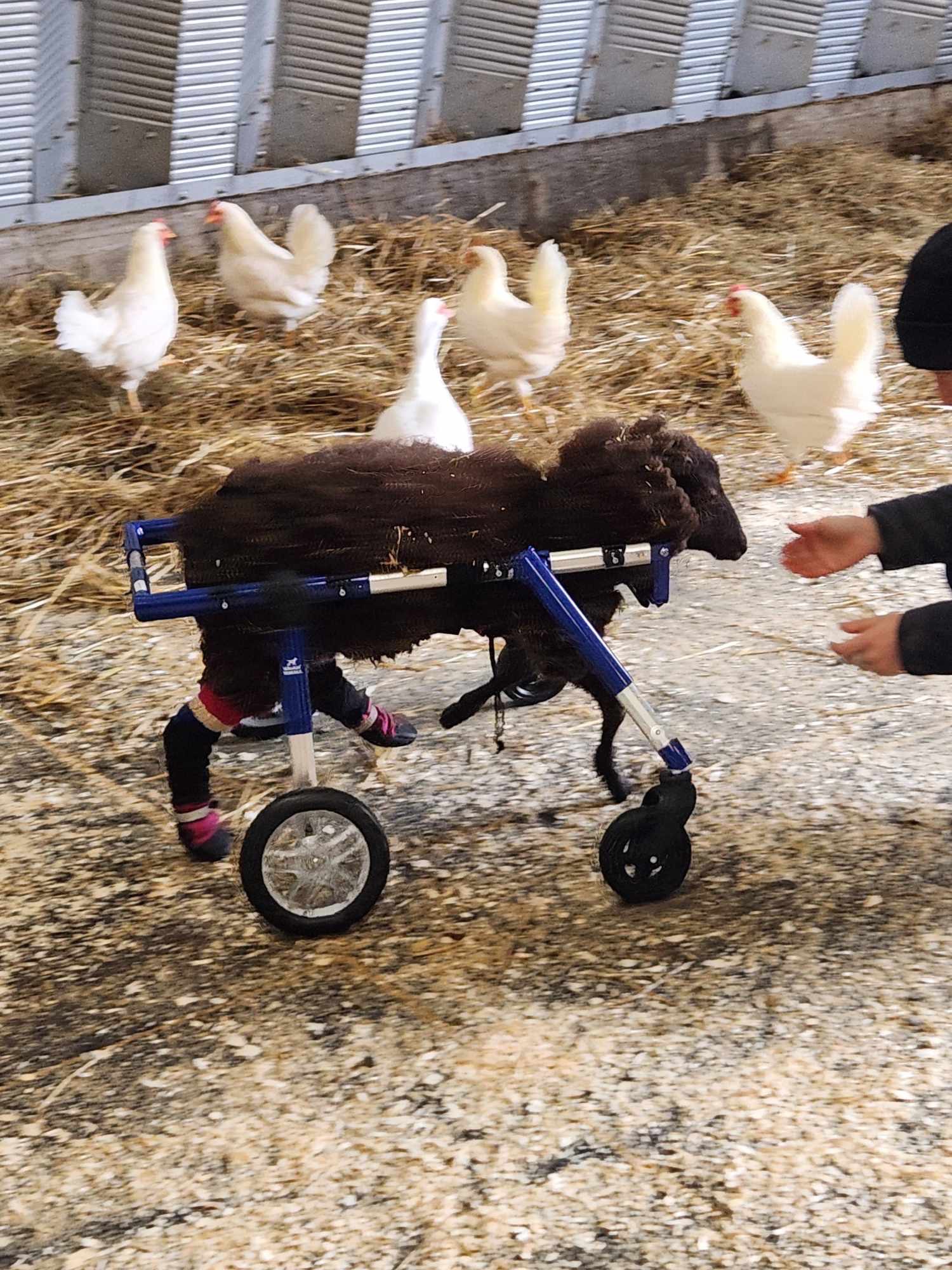
Urban bias shows up whenever someone thinks the answer is to “just use a private clinic,” as though everyone lives near (or could move close to) a practice that accepts their species, has room for new clients, offers field calls, and can respond in time. Even if moving closer to a clinic were an option for everyone with large animals, the clinics aren’t in place at a volume sufficient to support the whole province.
That is not the reality of rural New Brunswick.
I say that as someone who grew up in the city, spent my summers in the country, and has lived in both as an adult. I understand why someone in an urban centre might assume the answer is to drive somewhere else, call another clinic, or keep trying until someone says yes. That logic only works if the options are actually there.
I have also lived with a more privatized system, in Ontario, and it was not the dreamy solution people are now being sold.
The fees were comparable. The access was not. Calls went unanswered. There were too few vets. Clinics weren’t taking on new patients.
Practitioners were trying to run businesses while also doing the actual veterinary work. Given how demanding the conditions are for large-animal veterinarians, how well do you think this went over? Could you be running a business, from your truck, while driving to an emergency on rural back roads, hoping you get to the animal on time, knowing full well that you’re likely still nearly 30 min out from being on-site, and oh, did you restock the truck with all the supplies you might need after the last call?
Does that sound like a venture that enough veterinarians will jump at the chance to set up, knowing full well how much risk is involved in starting a business?
Will enough entrepreneurs see this opportunity, deem it a viable business model, set up large animal clinics, and employ large-animal veterinarians in sparsely populated areas?
When there’s already a shortage of veterinarians and clinics as it is, how could the fallout of losing our provincial veterinarians ever fill the gap, even if some veterinarians or entrepreneurs opened private practices?
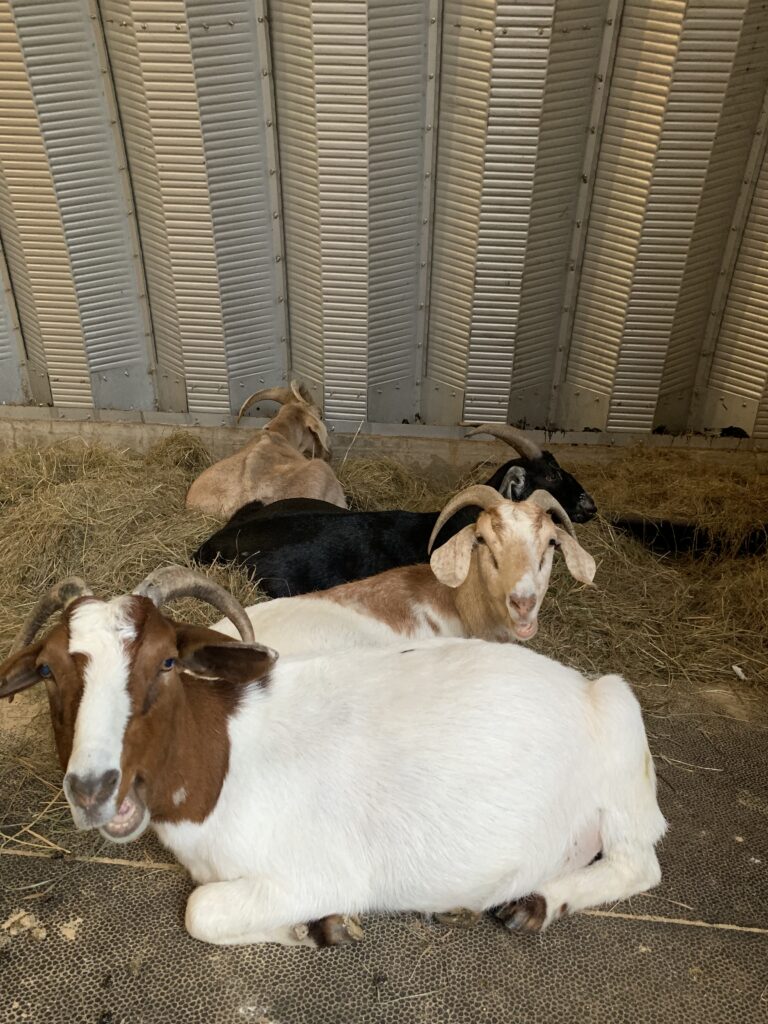
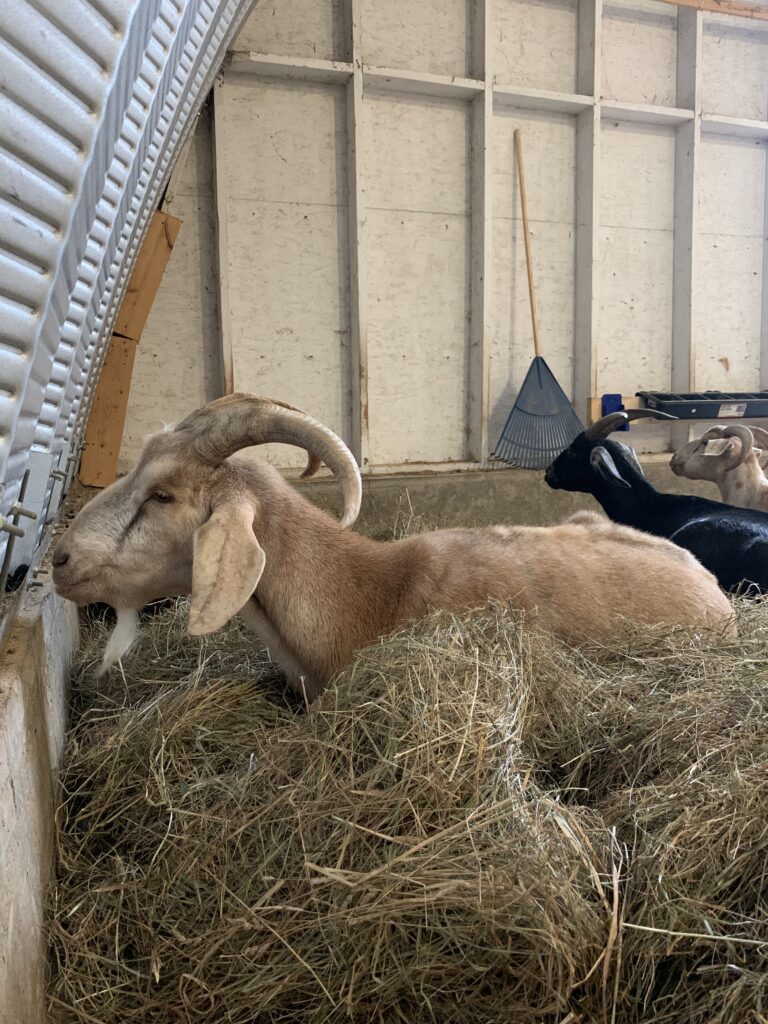
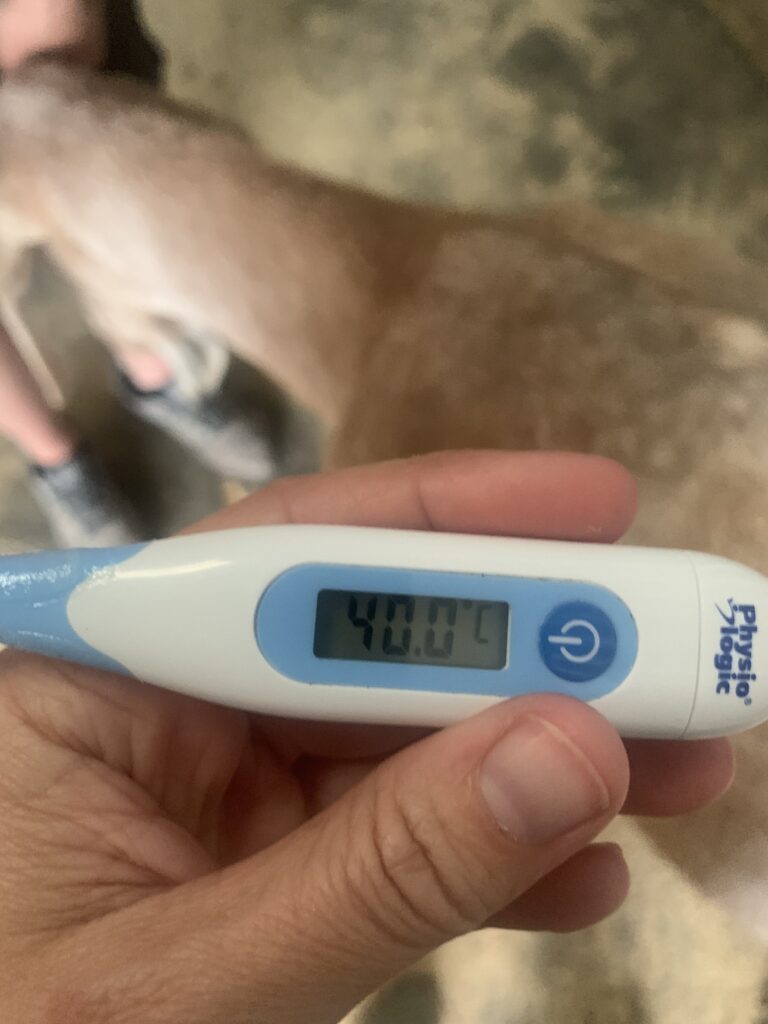
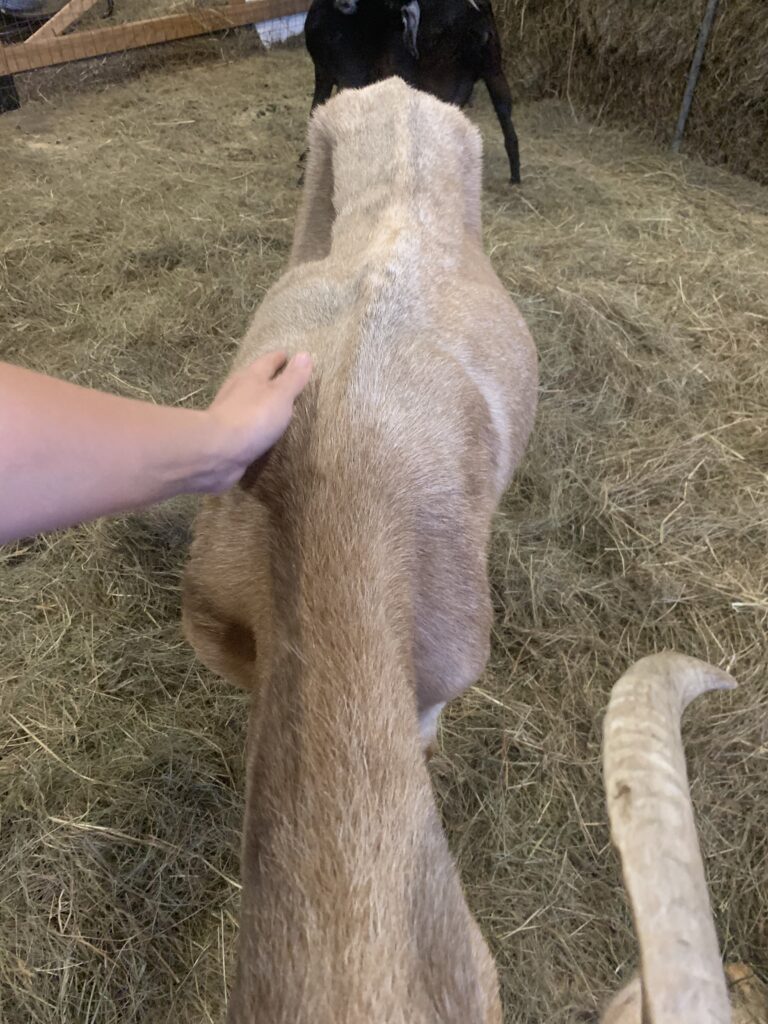
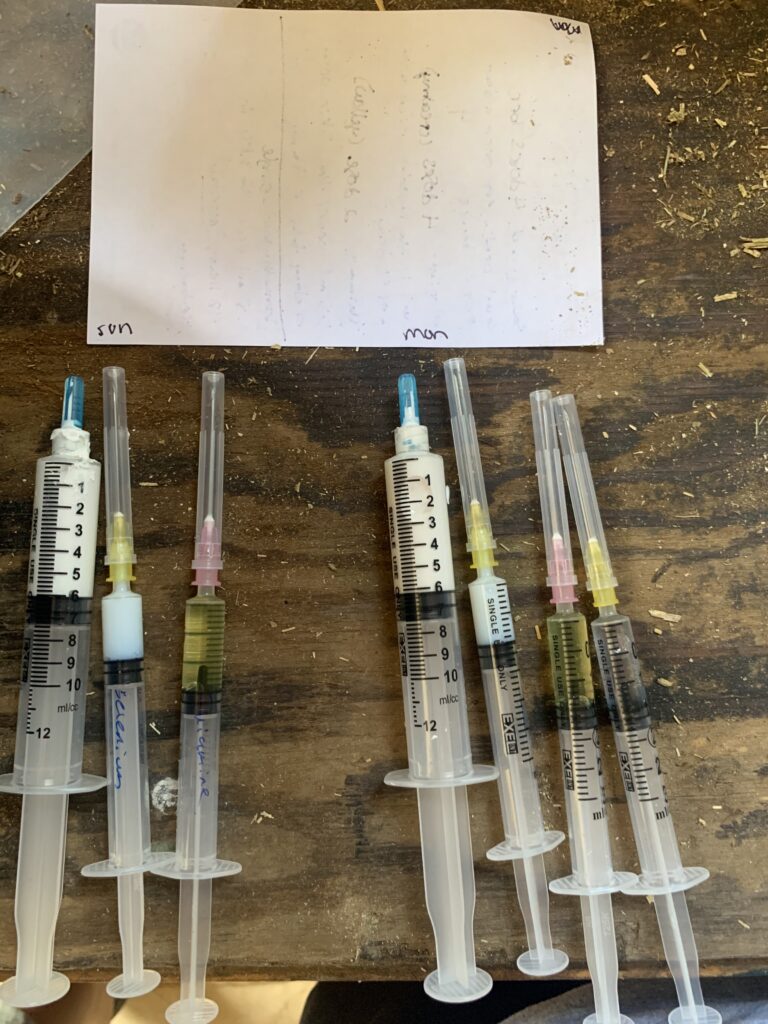
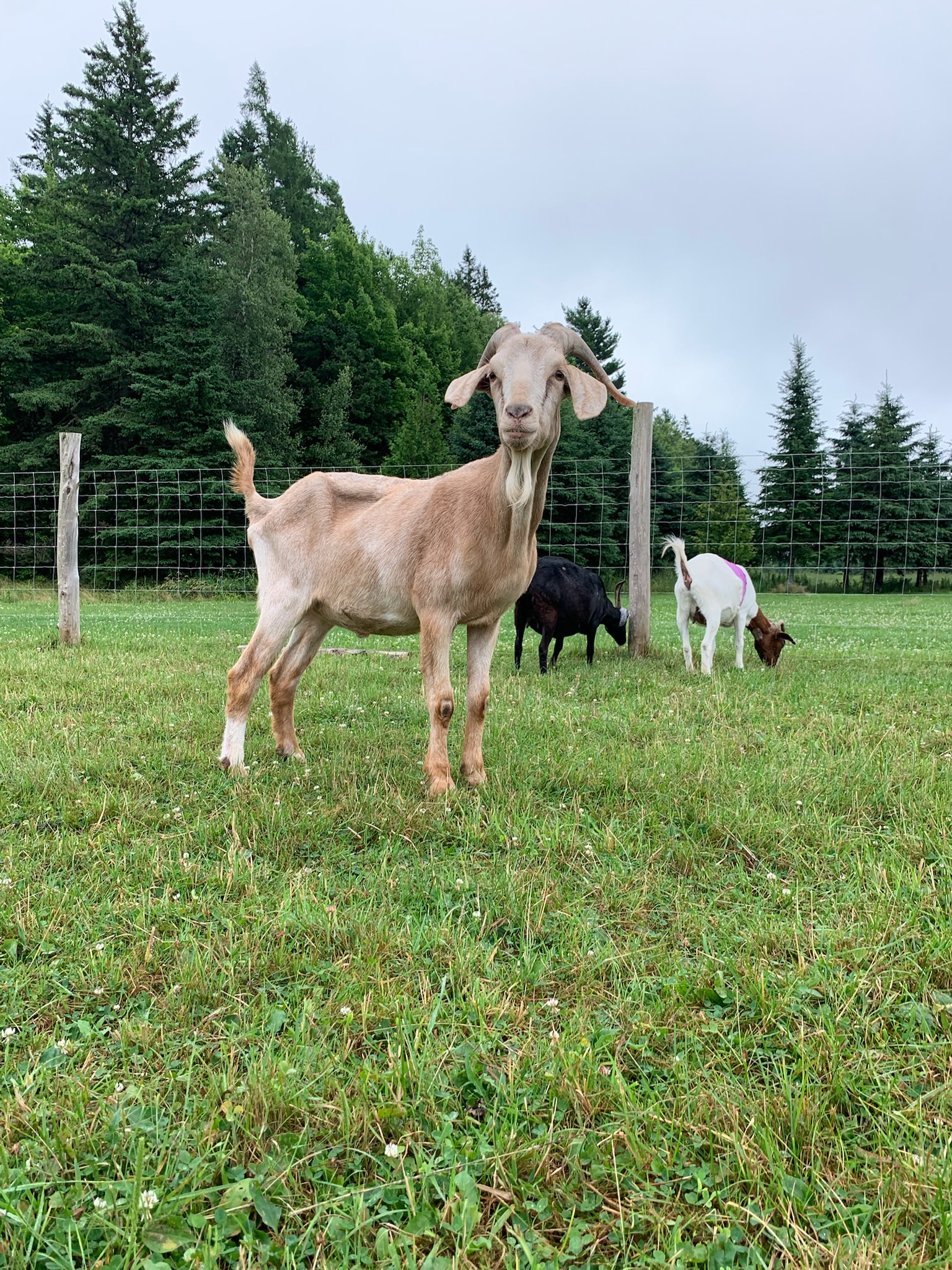
Merlin, Mel, Beatrice, and Mel were brought to Lily’s Place Animal Sanctuary to recover from severe neglect and receive medical care (thanks to the provincial veterinarians and lab services).
The chatter about “private” automatically meaning efficient, available, and responsive is simply wishful thinking, given where things are at in NB right now.
Private systems can work under the right conditions. Enough workforce. Enough density. Enough backup. Enough financial viability. Enough geographic coverage. New Brunswick does not have those conditions now, and there is no serious evidence that they will suddenly appear on the timeline the province is betting on.
For 0.032% of the provincial budget, New Brunswick had a chance to maintain a system that helps prevent suffering; a system that private access can’t meet now, or perhaps, ever.
For 0.032%, it could have recognized that animals in barns, pastures, sanctuaries, and rural communities matter too.
For 0.032%, it could have chosen not to widen an already dangerous gap in veterinary care.
Instead, the province is asking the public to accept preventable suffering.
Decisions like this do more than remove services; when the government minimizes the seriousness of the issue of large-animal veterinary access, it gives the public permission to do the same.
The decision tells the public that access to large-animal veterinary care is optional, not worth a second thought, and ignores/normalizes preventable suffering.
A province that decides 0.032% is too much of a financial burden to prevent suffering is saying they’d rather create a crisis for animals who require large-animal veterinarians than admit they are okay with the suffering that will happen as a direct result of their actions.
The province may be willing to treat access to large-animal veterinary care as optional. We are not. If Lily’s Place has to travel farther for care, rely more heavily on private services, or work harder to be able to meet the rising medical costs to get animals the help they need, that’s what we’ll do, with your help.
54 animals. Rising vet costs. No room for delay.
The article you just read is about more than policy. It is about what happens when provincial veterinary services are taken away, but emergencies don’t stop.
We get requests to help an animal in need over 200 times a year, roughly every 43 hours, because animals still get sick. They still need treatment. They still need qualified care, on time.
If we are forced to travel farther or pay more to access veterinary services, Lily’s Place will need community support to keep up.
A symbolic gift of $3.20 honours the 0.032% the province chose not to protect.
A gift of $32 or $43 helps us meet the real costs ahead.
Donate to Lily’s Place veterinary care
Discover more from lilysplace.ca
Subscribe to get the latest posts sent to your email.
Resident Updates (all)
How to help
Gracie, Sid, Annie, Punky, Johnny, June, Millie, Emma, Penelope, Bob, Josie, Rosie, Rory, Charlie, Moose, Claire, Nancy, Betty
sheep
Will Feral, Gabby
cats
goats
Tardy
horses
ducks
Sunny, Maple, Broom Hilda, Sage, Ursula, Astrid, Viola, Edith, Opal, Goldie, Rose, Blondie, Elsa, Pearl, Camilla, Amelia, Emma, Unicorn, Dorothy, Larry, Olivia, Ally, Stella, Dora, Celeste, Hart, Minty, Lucy, Little Miss
hens
turkeys
Bandito, Professor Peapod, Mr. T, Black Beard, Ebenezer, Mr. Pink, Mr. Blue, Mr. Green, Mr. Orange, Watson, Mitch
roosters
Barbara, Lydia, Delia
Quail
Animal Rescue
Action Items
Categories
Sanctuary Updates
Newsletters
Looking Deeper
Categories
Categories