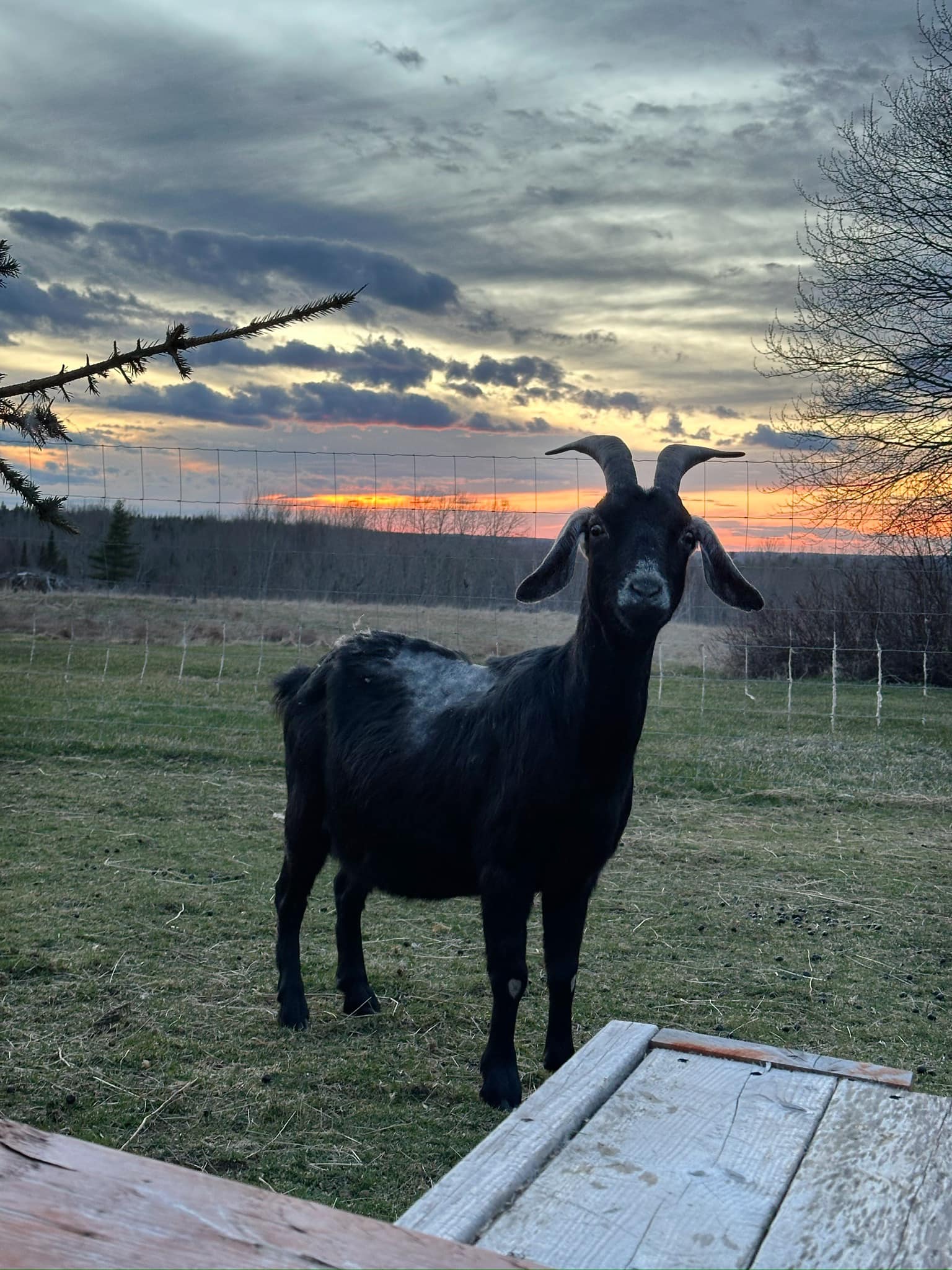
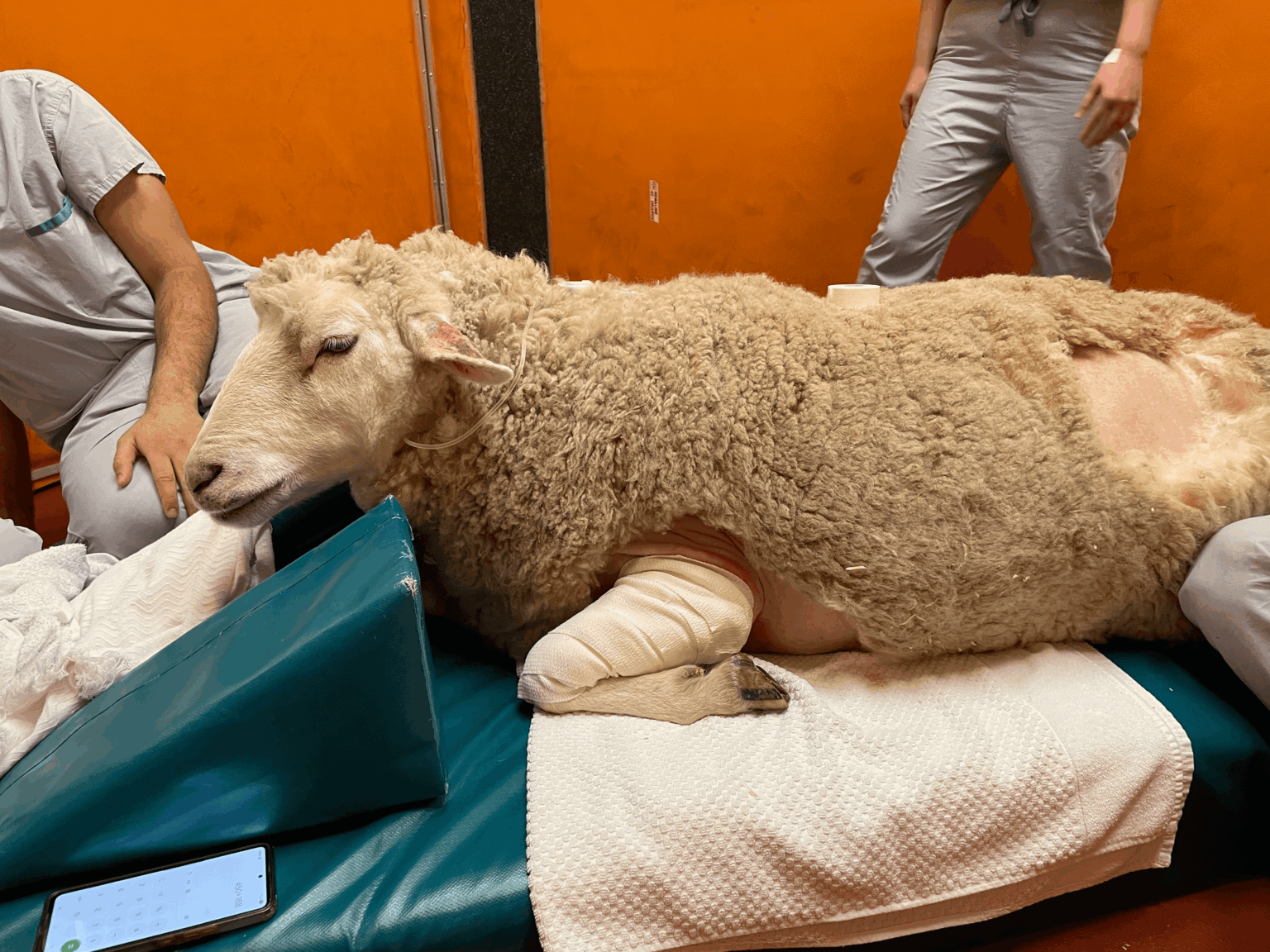
Pictured here is Mel back in April, not long after she arrived. She was placed here after being seized by the NB SPCA due to cruelty/neglect, along with her friends Beatrice, Kate, and Merlin. Among other health issues, all four goats had parasites, including a lice infestation. While they all lost a lot of fur during that time, Mel and Merlin lost the most.
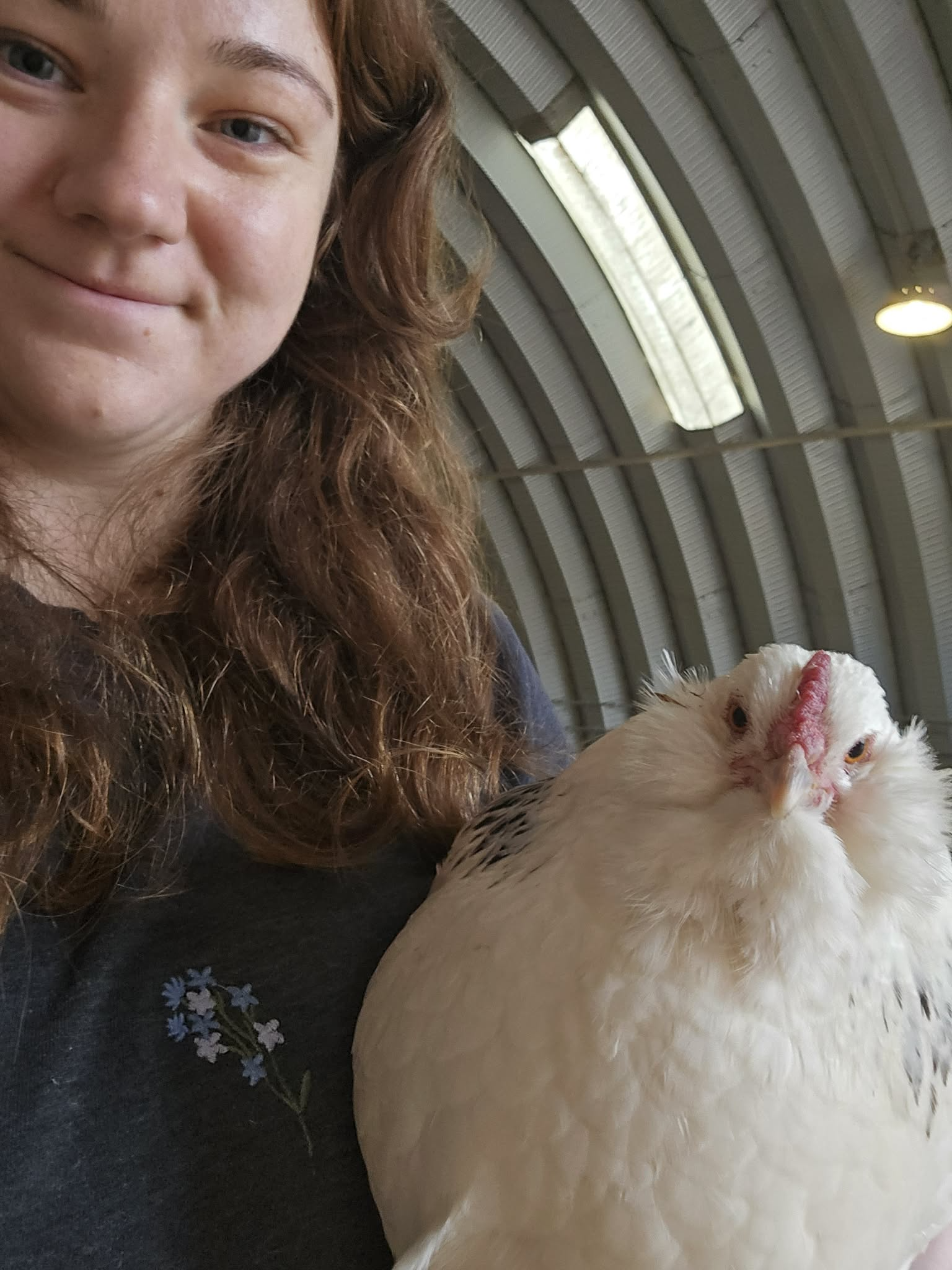
When I (Jamie) started at the Ontario SPCA, I was told that almost nobody in the position I was hired for lasted more than two years. I stayed slightly longer than that before taking on a temp contract that was more administrative than animal care at another branch. After finishing that contract, I didn’t return to the organization for several reasons, most notably, compassion fatigue.
It would be a decade before I returned to the field and started the sanctuary with Tim. In the meantime, we fostered dogs, supported animal rescues, held fundraisers through my business for animal organizations, volunteered, and were monthly sponsors of a farm animal sanctuary – all ways of helping that didn’t require a 24/7 commitment while I recovered.
Now that animal care and rescue are a part of my daily life again, with 40+ volunteer hours clocked for the sanctuary most weeks, I’m acutely aware of the toll it’s taking on my mental health.
Despite misconceptions, Tim and I aren’t employees of the sanctuary, so while we provide animal care and fundraising, we’re also working full-time jobs – that’s not a schedule that allows for decompressing.
Having healthy boundaries is a struggle.
In the past few weeks, I’ve witnessed the people I love break down from the heavy emotional weight of caring (and being the final home) for rescued animals. They’ve seen me do the same – more than once.
I’ve watched a volunteer burn out from the pressures of fundraising.
I’ve witnessed the cycle of turnover with animal care volunteers continue. It’s often triggered by another resident facing a health crisis with no cure.
I’ve watched the face of someone fall when they realized that almost every animal in our care went through something traumatic, and some may never fully recover.
I’ve discussed and planned for a grave to be dug for someone we love.
I’ve advocated for an animal whose skin was hanging off their body due to a deep laceration that went unnoticed for weeks and is now infected. They were just a baby.
I’ve had a conversation with a veterinarian who tells me, in their own words, that on that day, they were giving up hope. They were questioning whether they were making a difference at all. When, in fact, they were making ALL the difference by being one of the most competent, compassionate, and steadfast in the field that I’ve experienced to date.
I’ve been a part of grief discussions with other sanctuary founders, all teetering on the razor’s edge of their mental health. Like the vet, many of them are losing hope.
I’ve spoken with front-line staff who take your calls when you need help with your animal. They receive the brunt of the abuse from people with little patience or compassion. There are tears in their eyes while they tell me about the last week of calls they’ve had that are still weighing heavily on their shoulders. They are worried about the animals and putting on a brave face.
I’ve had to say no to requests for help that, within the last 48 hours, included a duck with a broken leg and horse who will be put to sleep as they’ve run out of places to call.
Despite providing a home to 13 new animals this year so far, the baby animal I mentioned earlier, the duck and the horse are the 84th, 85th and 86th animals that got turned away due to a lack of resources out of the 99 pleas for help.
That’s 86 animals who needed us and at least as many people behind each request that came to us as a last resort, desperate for help, only to be turned away.
All of these examples aren’t to have a pity party – we are firmly committed to being in the field of animal care, and we’re thankful to be here.
However, I share these examples as they are universal in the world of animal care & rescue.
These real-life examples give a small glimpse at the compounding circumstances and pressures that lead to compassion fatigue.
If someone you love is in the animal care field,
1) Check in with them
2) Ask what you can do to support them
3) Listen without offering unsolicited advice or “fixes”
4) Consider nominating them to attend (for free) the Animal Caregivers Wellness Retreat at Lily’s Place in August. All of the spots for new nominations are already full, but send us an email we’ll do our best to find a way to help. Details can be found at lilysplace.ca/wellness
Related
Discover more from lilysplace.ca
Subscribe to get the latest posts sent to your email.